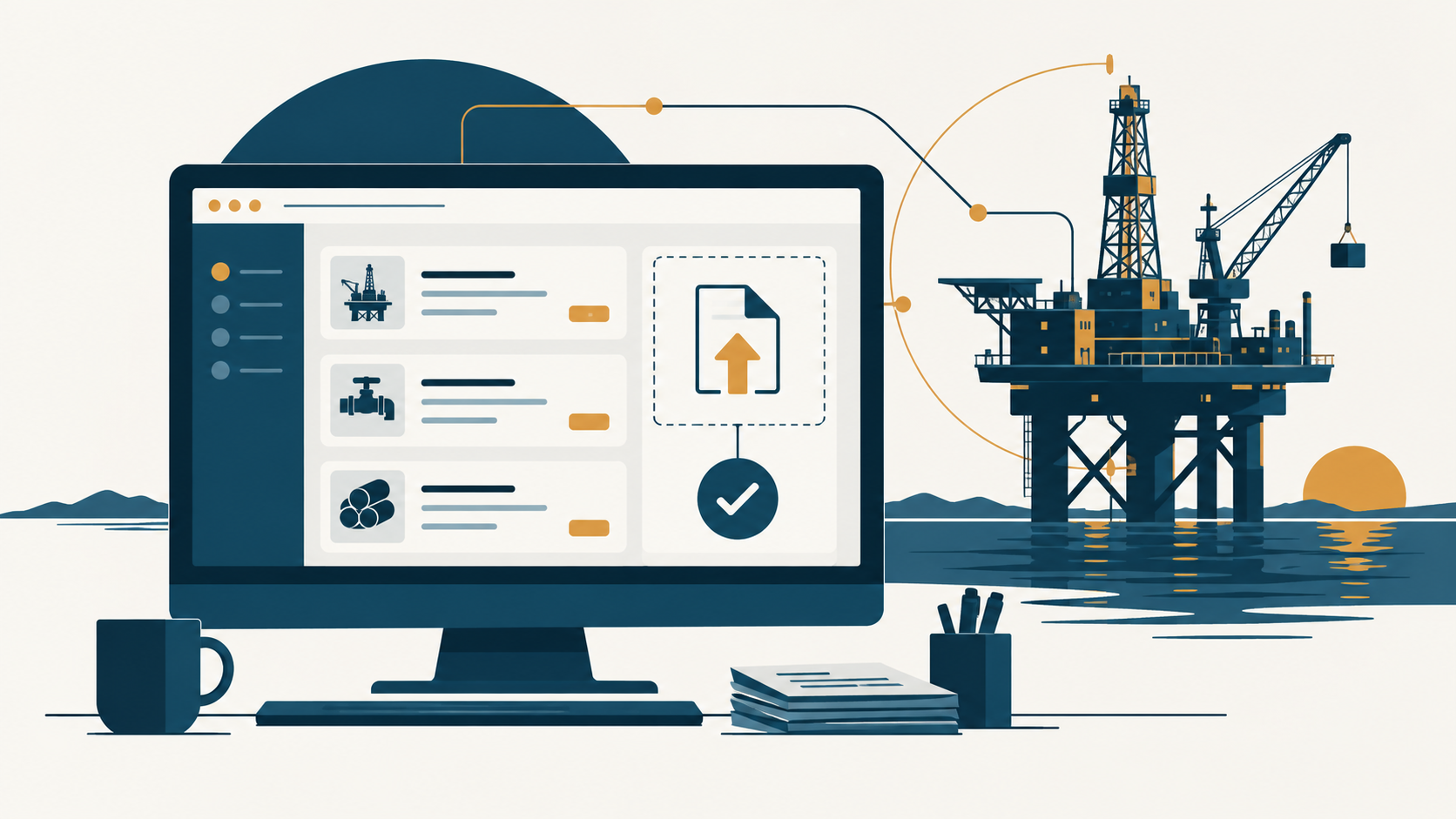
Petronect is the portal where Petrobras publishes its procurement opportunities, receives bids and manages its supplier registry. If you sell — or want to sell — to Brazil’s biggest oil and gas buyer, you will end up working inside it. And if you do not read Portuguese, it will be the least friendly part of the journey. We spend hours in this portal every week preparing bids for foreign suppliers; this is how it actually works, explained in plain English.
Below: what the portal is and how long it will be around, what you can see without an account, who needs to register, what it costs, and the features most foreign suppliers never find.
What Petronect is — and how long it will be around
Technically, it is an SAP-based e-procurement platform serving as the official channel for Petrobras purchases and contracting. Petrobras buys under Lei 13.303/2016 — Brazil’s state-owned companies law — so its tenders do not appear on PNCP, the federal government’s central procurement portal. The portal and Petrobras’ own channels are the source.
One thing to know in 2026: Petrobras has been migrating procurement to SAP Ariba since around 2022, and has publicly confirmed the current portal as official at least until June 2026. Our advice: stay source-agnostic. During the transition, individual processes may run on either platform, and each opportunity’s documents tell you where it lives. Build your routine around monitoring the opportunities, not around one piece of software.
What you can see without logging in
More than most people expect. The public opportunity list is visible without an account and shows the tender number, the object description, which company is buying, whether the scope is national or international, and the key dates.
Petrobras also publishes its tenders on the Transparency Portal — in Portuguese and English, with data export — and formal extracts run in the Federal Official Gazette (DOU). We mapped every channel in where Petrobras tenders are published.
The honest caveat: the public listing gives you one line per opportunity. The real scope, requirements and deadlines live in the edital — the tender document — in Portuguese. Object descriptions are also written in procurement shorthand, and learning the buyers’ naming conventions for your product line takes weeks of watching. That gap is where foreign suppliers lose time, and it is the gap this site exists to close.
Who needs to register — and for what
Browsing needs nothing. Bidding does not strictly require registration either: Petrobras’ public tenders accept bids from unregistered suppliers. But working seriously means registering, because registered suppliers automatically receive e-mail invitations for tenders in their registered goods and services families — the difference between finding opportunities and being found by them.
Brazilian companies may qualify for a Simplified Registry; foreign companies use the Corporate Registry, with no Brazilian CNPJ required. The full process is in our step-by-step registration guide for foreign companies, and the paperwork — apostilles and sworn translations included — in the documents checklist.
What Petronect costs
Registration is free — Petrobras charges no registration fee. Portal usage, under the fee model in force since October 2023, works like this:
- Access fee: R$107 per month, per registered company (CNPJ), required to participate in public opportunities. Direct-contracting processes (dispensas) below R$85,000 and auctions are exempt — official access fee page.
- Transaction fee: 0.2% of the contract value, capped at R$45,000, charged to the winning bidder only. Opportunities under R$50,000 are exempt — official transaction fee page.
Read it as a business model: watching costs nothing, participating costs about the price of a business lunch a month, and the only significant fee arrives attached to a contract you already won.
What each level of access unlocks
The same logic, laid out. This is the table we wish someone had shown us on day one:
| What you want to do | What it takes |
|---|---|
| See the public opportunity list (number, object, buyer, scope, dates) | Nothing — public, no login |
| Read tender listings in English, with data export | Nothing — Transparency Portal |
| Submit a bid in a public tender | Portal access; supplier registration encouraged but not mandatory |
| Receive automatic e-mail invitations in your supply families | Completed supplier registration |
| Participate in public opportunities beyond the exempt ones | Access fee, R$107/month (dispensas under R$85,000 and auctions stay exempt) |
| Get keyword “Match” alerts from the free Minha Petronect analytics | Portal account — the feature itself costs nothing |
| Pull public opportunities into your own systems via the API Store (launched March 2025) | Active account, compliant with the fees |
The features most foreign suppliers never find
Set up the keyword alerts on day one. The portal’s free analytics area lets you define terms and receive “Match” alerts when opportunities fit them — the closest thing to a native alerting system, and most foreign users never open it.
If you run a CRM or BI stack, the API Store — launched in March 2025 — exposes public opportunity data to active, fee-compliant accounts. Tenders flowing into your pipeline instead of a mailbox.
And plan for the language. The working language is Portuguese: editais, clarification rounds, messages from buyers. English listings on the Transparency Portal solve discovery, not bidding. That is the gap Tender Radar closes — Brazil’s public energy tenders monitored, matched to your product line and delivered in English — and for a specific edital you already have, our advisory desk produces a 48-hour English Tender Brief for US$190.
A realistic first week in the portal
For a foreign supplier starting from zero, this is the sequence we would run — it front-loads the free wins:
- Day one: create your access, load company data, and set keyword alerts in the free analytics area. From this point the portal is watching for you.
- Same week: start the Corporate Registry questionnaires. The apostille and sworn-translation pipeline for your documents is the long pole of the whole exercise, so trigger it immediately.
- In parallel: skim the public opportunity list and the Transparency Portal’s English export for anything live in your product line. Log tender numbers and dates — deadlines in Brazilian oil and gas tenders are unforgiving.
- When something matches: pull the edital, make a bid/no-bid call fast, and clock the clarification deadline before anything else. Questions submitted late are questions unanswered.
None of that requires fluency in Portuguese — but almost every step after it does, which is why serious foreign bidders line up translation and bid support before the right tender shows up, not after.
Frequently asked questions
Is Petronect available in English?
Expect to work in Portuguese. Tender objects, editais and clarification exchanges run in Portuguese, while Petrobras’ Transparency Portal publishes tender listings in English — which solves finding opportunities, not bidding on them. Most foreign suppliers pair the portal with an English monitoring service or an advisor.
How much does the portal cost to use?
Registration is free. Participating in public opportunities costs R$107 per month per registered company, with dispensas below R$85,000 and auctions exempt. Winners pay a transaction fee of 0.2% of the contract value, capped at R$45,000; opportunities under R$50,000 are exempt.
Can I see Petrobras tenders without a Petronect account?
Yes. The public opportunity list shows tender number, object, buyer, scope and dates with no login, and the Transparency Portal publishes tenders in Portuguese and English with data export. Formal extracts also appear in the Federal Official Gazette.
What happens to the portal after June 2026?
Petrobras has confirmed it as the official channel at least until June 2026 while migrating procurement to SAP Ariba. Beyond that, assume processes may run on either platform and confirm the channel in each tender’s documents — good practice already today.
Stop hunting tenders in Portuguese.
Tender Radar delivers Brazil’s public energy opportunities in English, matched to your product line — from US$49/month for founding subscribers.